Handbooks and Manuals
Steward Resources
National Agreement
JCAM
NALC Constitution
Employee and Labor Relations Manual (ELM)
Materials Reference System (MRS)
Postal Operations Manual (POM)
Administrative Support Manual (ASM)
Joint Statement on Violence and Behavior in the Workplace
Joint Statement on Violence, Feb. 14, 1992. The initial, groundbreaking statement signed by USPS, NALC and several other postal organizations. M-01242
Supplemental Joint Statement on Violence – Supplemental statement issued in 1992. M-01243
Snow Award – C-15697
Sixth Circuit Court decision upholding regional arbitration award demoting a supervisor for violation of the Joint Statement on Violence and Behavior in the Workplace. (June 4, 2003) M-01488
Decision of the United States Court of Appeals for the Fourth Circuit. This decision reversed a decision by a lower court when it determined that the award of Arbitrator Raymond Britton in the Clinton, MD, case could not be upheld. The Fourth Circuit determined that the decision to remove the postmaster should be upheld. M-01518
Jointly Released Article 8 Questions and Answers
NALC and the Postal Service have released a jointly developed document with the national parties’ mutual understanding on specific sections of Article 8 of the 2023-2026 USPS/NALC National Agreement. The document, M-02011 in NALC’s Materials Reference System (MRS), answers commonly asked questions about recently implemented provisions of the contract.
Other Manuals and Publications
Branch 111 Resources
Branch By-laws and LMOUs. Utah State By-laws and Constitution
Steward Forms
Forms You’ll Need When Filing Grievances
PS Form 8190 – Joint Step A Grievance Form (Fillable)
Request for Steward Time and Information (Fillable)
Request for Information
Request for Steward Time
Request for Informal A Meeting
Extension
PS Form 1767 – Safety Hazard Form
Request Form to Review Supervisor’s Personnel Records
Letter Carrier Political Fund Sign Up Form
OWCP
Help With an on the job injury
ECOMP
Please register on ECOMP asap, before you get injured. It saves time later. Here’s the link
Filing a CA-1 on ECOMP – Traumatic Injury
Filing a CA-2 on ECOMP – Occupational Disease
Occupational diseases are defined as injuries that occur over a period longer than one day or one work shift. To successfully file a CA-2 Claim for Occupational Disease or Illness with the Office of Workers’ Compensation Programs (OWCP), the injured letter carrier needs to provide a description of their work duties along with a medical narrative from a doctor that makes a causal connection between specific work factors and your diagnosed condition(s).
The first step in filing a CA-2 is writing a work narrative. A doctor needs to read the narrative and write a medical report that links the diagnosed injury to specific work factors.
Step 1: Employee narrative
Prior to filing the CA-2, you need to explain your day-to-day duties as a letter carrier to your doctor. A written explanation of your job duties as a letter carrier provides your doctor with the information to write a medical opinion connecting specific work factors to your diagnosed conditions. Most doctors are very busy, so you need to keep your explanation to one page.
Describe an average day on your route. Mail volume and deliveries fluctuate every day so avoid exact numbers. Describe how long you sort and deliver mail. Estimate mail volumes, weights, distances and repetitions. Never exaggerate. Use action words that describe your work factors like walking, carrying, reaching, pushing, pulling etc.
To fully explain the range of letter carrier duties, you can provide your doctor with the appropriate copies of/or the link to these Letter Carrier Duties photos and explanations.
Step 2: The doctor’s narrative
Once you have your job description completed, give a copy of it to your doctor.
OWCP requires a “rationalized” medical report that describes the causal relationship between specific work factors and the diagnosed injury. OWCP will not accept a claim for a pain diagnosis. A rationalized report must be based on objective medical evidence such as tests, x-rays, or MRIs. The doctor should describe how specific work factors (reaching, carrying etc.) caused, aggravated or accelerated the diagnosed injury.
A doctor’s opinion must be made with “reasonable medical certainty.” Reasonable medical certainty is a bureaucratic term required by OWCP. Terms like “likely, probably or possibly” are insufficient and will result in the claim being denied.
The medical opinion of a board-certified specialist with expertise in your particular injury will have more weight with OWCP than a general practitioner. You can ask your general practitioner for a referral.
Step 3: Submitting the CA-2
Once you have the medical narrative describing the causal relationship between your work and your medical condition, you are ready to file a CA-2, Notice of Occupational Disease.
The best way to file a claim is to register and file your claim using ECOMP, OWCP’s electronic claim filing portal. Filing electronically saves time and makes it easier to manage your claim and communicate with OWCP. You can register and file a claim on your smartphone, tablet or computer. If you don’t have a device to file a claim, the Postal Service must allow you to file your claim on a postal computer.
As you fill out the CA-2, you will come to question 11; Date you first became aware of the disease or illness. You can use the most recent date your particular injury was diagnosed. Question 12 asks the date you first realized the disease or illness was caused or aggravated by your employment. That would the date on your doctor’s medical report on causation.
You should file the CA-2 as soon as possible, preferably within the 30 days from the date listed in question 12. However, the CA-2 will meet the statutory time requirement if filed no later than 3 years after the date of your last exposure to the work factors that caused the injury.
If you must file a paper form, you can print the form from OWCP’s website here or request the form from your supervisor.
Once you complete your portion of the CA-2, make a copy of it and hand the original along with your narrative to your supervisor, do not place it on their desk or in their inbox. The supervisor’s instructions for the CA-2 require them to give you the signed receipt on (page 4) immediately. Request a copy of the completed CA-2 for your file.
The Postal Service is required to send your CA-2 to OWCP within 10 working days of receiving it from you. If OWCP has not received your CA-2 after 10 working days, contact your shop steward or National Business Agent’s office.
Once OWCP gets your CA-2 they will assign you a claim number and send you a letter. If you do not receive a letter from OWCP, call your OWCP district office and ask for your file number.
Medical reports should be sent directly to OWCP, not the Postal Service. Once you have the file number, you can mail the medical information – test results, medical narratives etc. directly to:
Office of Workers’ Compensation Programs
PO Box 8311
London, KY 40742
The best way to send documents to OWCP is to directly upload the documents via OWCP’s web portal, ECOMP. Go to: https://www.ecomp.dol.gov/#. On the web page look under Need to Upload a Document, click on the blue Upload Documents icon. Follow the instructions on the next page. Once a document is uploaded, OWCP will assign a Document Control Number (DCN). Record the DCN and the date and time of the upload.
When communicating with OWCP, it is essential to have your file number on every page, usually at the very top. Documents mailed to the London, Kentucky address get scanned; a page without a file number may never get into your claim file.
The Postal Service has an obligation to make every effort to find you work within your limitations. Request a copy of form CA-17, Duty Status Report from your supervisor. The Postal Service is responsible for filling out the job requirements on the left (side A) of the CA-17. Your doctor fills out the right (side B) of the CA-17, listing any medical restrictions. When your doctor has completed and signed part B, take a copy of the completed CA-17 and give one copy to your supervisor.
Step 4: Once your claim has been filed
The Postal Service has 10 business days to send your CA-1 claim to OWCP. Once OWCP receives the claim you will be sent a Case Create notification on your ECOMP dashboard or by mail. The Case Create notice has important information on the next steps needed in the claims process. If you do not receive a notice from OWCP that your claim has been received, contact your shop steward or National Business Agent’s office.
OWCP’s goal is to return each injured employee to work as soon as he or she is medically able. A properly completed CA-17 should explain your work duties to your doctor. Delivering mail is physically demanding work, and returning to work before you have properly healed can lead to debilitating, life-long injuries. Make sure your doctor understands the physical nature of your job.
Take a CA-17 to every medical appointment, copy or take a picture of the completed form and give the original to your supervisor. The Postal Service has an obligation to offer you work within your restrictions and the completed CA-17 must be provided to the Postal Service to determine if there is work available within your restrictions.
If the Postal Service offers you a job and you are uncertain if you can perform all of the duties of the job, you have the right to take the job offer to your doctor. If you are told to accept or refuse the job offer immediately, accept the job and write “under protest” next to your signature. Refusing a job offer can lead to termination of your benefits. If your doctor believes the job offer exceeds your limitations, he or she must write a medical report listing the specific duties of the job you cannot perform.
Your doctor should send medical reports directly to OWCP. You can also upload medical reports into your claim file via ECOMP. Your medical reports are protected by the Privacy Act and should be sent directly to OWCP, not the Postal Service.
The Postal Service is prohibited from calling your doctor. Any contact with your doctor must be in writing, and the Postal Service is required to send you a copy of the letter, and your doctor’s response.
Step 5: Once you have filed your claim, OWCP has three options:
1. Request more information
OWCP will notify you if your case lacks enough information to make a decision in your case. They will notify you in ECOMP or mail you a development letter requesting more information. Development letters often list a series of questions for both you and your doctor to answer. Development letters always give you exactly 30 days from the date on the letter to respond.
It is important that you act quickly to respond within the 30-day time limit. Make an appointment with your doctor as soon as possible. Bring the OWCP letter to your appointment and ask your doctor to thoroughly answer the questions. OWCP must receive the information within the 30 days, a postmark is insufficient. Make sure your doctor understands the urgency. Use ECOMP to upload your documents directly to your file.
Never submit documents without first making copies for your own records. You need to organize your records to be ready to respond to OWCP. If you have problems with your claim, contact a branch officer or your National Business Agent’s office for help.
2. Claim Accepted
OWCP will send you a letter accepting your claim, listing the accepted conditions and a “Now That Your Claim Has Been Accepted” attachment that includes tools for managing your claim. Read the attachment carefully and keep it handy as it has important information you can reference regarding your claim.
When your COP has ended you should file a CA-7 claim for compensation. Postal regulations require Postal Service Health Resource Management (HRM) to provide you with form CA-7 when you are on COP and it appears you will not return to work after 30 days.
You can file a CA-7, from your ECOMP dashboard by clicking New Claim. Submit a completed CA-7 every two weeks.
If you file a paper CA-7, take a picture or make a copy and give it to your supervisor or HRM office. Attach a written request for a copy of the completed CA-7, including management’s portion every time you submit it to HRM.
The Postal Service has five working days to complete its portion of the CA-7 and send it to OWCP. Keep a copy of every CA-7 for your file.
OWCP’s goal is to return each injured employee to work as soon as he or she is medically able. Thoroughly explain your work duties to your doctor. Delivering mail is physically demanding work, and returning to work before you have properly healed can lead to debilitating, life-long injuries.
Job Offers/ Returning to Work
The Postal Service has an obligation to make every effort to find you work within your restrictions. A CA-17 must be provided to the Postal Service to determine if there is work available within your restrictions.
Never refuse a job offer. Refusing a job offer can lead to termination of your benefits. If the Postal Service offers you work and compels you to either accept or refuse a job offer, always accept the job offer.
If you are uncertain if you can perform all of the duties of the job, write “under protest” next to your signature, and contact your shop steward. You have the right to take the job offer to your doctor. If your doctor believes the job offer exceeds your limitations, he or she must write a medical narrative listing the specific duties you cannot perform.
Your doctor should send the reports directly to OWCP. You can also upload them into your claim file via ECOMP. Your medical reports are protected by the Privacy Act and should be sent directly to OWCP, not the Postal Service.
The Postal Service is prohibited from calling your doctor. Any contact with your doctor must be in writing, and the Postal Service is required to send you a copy of the letter, and your doctor’s response.
3. Claim Denied
If OWCP denies your claim, the denial letter will list the basis for the decision so you know what you need to appeal the decision. Along with the denial, OWCP will give you a list of your appeal rights. Each venue has specific time limits that are absolute. If your claim is denied contact a branch officer or National Business Agent’s office immediately for help in your appeal.
Scheduled Award Request
Other Info
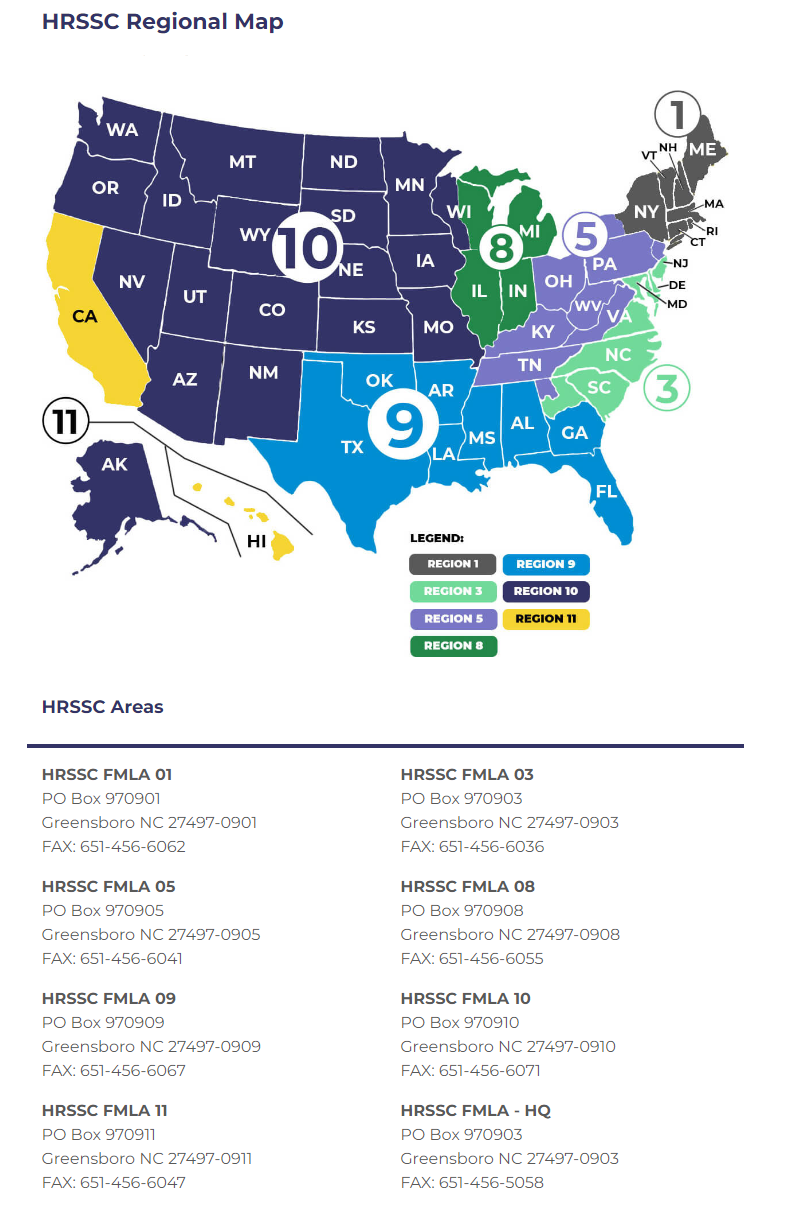
Family Medical Leave Act (FMLA)
Talk to you steward for help filing FMLA
Department of Labor – WH-380-E – Own Condition (Fillable)
Employee’s serious health condition, form WH-380-E – Use when a leave request is due to the medical condition of the employee.
Department of Labor – WH-380-F – Family Member (Fillable)
Family member’s serious health condition, form WH-380-F – Use when a leave request is due to the medical condition of the employee’s family member.
NALC FMLA Forms
NALC Form 1: Medical Certification-Employee’s Own Serious Health Condition
NALC Form 2: Medical Certification-Family Member’s Serious Health Condition
NALC Form 3: Certification of Qualifying Exigency for Military Family Leave NALC Form 4: Certification for Serious Injury or Illness of Current Covered Servicemember for Military Caregiver Leave
NALC Form 5: Certification for Serious Injury or Illness of a Veteran for Military Caregiver Leave
NALC Form 6: Employee’s Notification of New Child in the Family